Some friends have suggested that we attach helmet cameras to our heads to give viewers the unabridged full monty version of our lives.
Trust us, you really don’t want to see all of it.
Some friends have suggested that we attach helmet cameras to our heads to give viewers the unabridged full monty version of our lives.
Trust us, you really don’t want to see all of it.
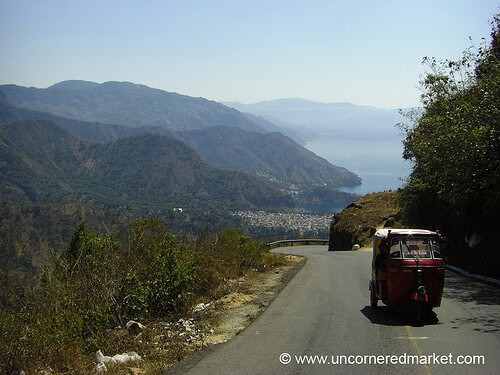
There we were at the dock in San Pedro bargaining for a boat to Santiago. The price seemed prohibitively high for a whimsical afternoon side trip on Lake Atitlan. Natasha, another traveler hoping to take the same boat, also questioned the price.
“You know, I have a car here. We could drive. You can just give me some gas money.”
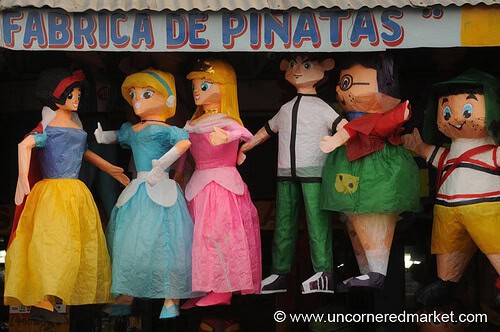
The other day we broke down in Guatemala City — in front of a piñata factory no less.
I helped push the stalled PT Cruiser whose motor had knocked, pinged and spoken of better days. Back then forward, we rolled the car out of traffic and into a parking lot.
Guatemala City is notorious for guns, violence, drugs, blighted neighborhoods and danger lurking around every corner. And there we were in a sketchy little parking lot in the middle of the city at dusk.
Sawdust carpets adorned with brightly-colored designs and cut fruit line the streets, giant carved floats sway on the backs of local men and women, and depressing dirges creep out of battered horns. Ceremony is high with marching Roman soldiers and elaborate crucifixion ceremonies as Guatemalan communities come together to mourn Jesus' crucifixion and celebrate his resurrection and the close of Lent.
This is Semana Santa (Holy Week). And in Guatemala, no place takes to the occasion like the town of Antigua. We've never experienced a lead-up to Easter quite like it. The slideshow and video below show why.
As we prepare for our departure to Guatemala and secure the various latches on our gear, I'm reminded of being robbed by airport security employees in Bangkok's Suvarnabhumi Airport last year. Fortunately, miraculously – and somewhat shadily – I was reimbursed.
A recent comment from a woman who had money stolen at airport security in Toronto, Canada served as a reality check that this sort of thing can happen anywhere.
While reading Nicholas Kristof’s opinion piece on Burma (Myanmar) last month I was consumed by a rush of memories – conversations and images from of our month-long visit there last year. My comment on his article shares my views regarding the effectiveness of international sanctions in changing the behaviors of the military government (junta). I also address whether or not travel to Burma helps or hurts ordinary people.
The second anniversary of the beginning of our travels passed in December. We use this milestone as an opportunity to answer the oft posed question: “What have you learned from this journey?”
Rangoon, Burma. The name conjures the tropical blues of a steamy colonial outpost.
We wondered: would the current reality still match?
The Baltics. Reminiscent of a bargain property on the original Monopoly board; not to be confused with the powder keg Balkans; a region whose history features intermittent eras of independence and occupation; and a place whose emotional pendulum swings between the almost white nights of its brief summers and the steel wool grayness of its long winters.
Home to over seven million people and three distinct languages and cultures, the Baltic region comprises the countries of Estonia, Latvia and Lithuania.
Now, a virtual show of hands: who knows where the Baltics are?
43 posts and 16 photo sets later, we’ve reached the end of a long road of reflection on China, an on-the-fly addition to our around-the-world journey.