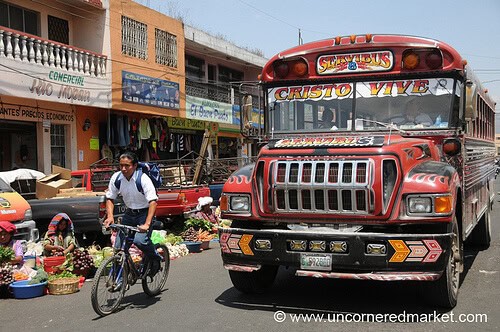
What do we do when we’re not chasing chicken buses from one town to the next? Here’s a hint.
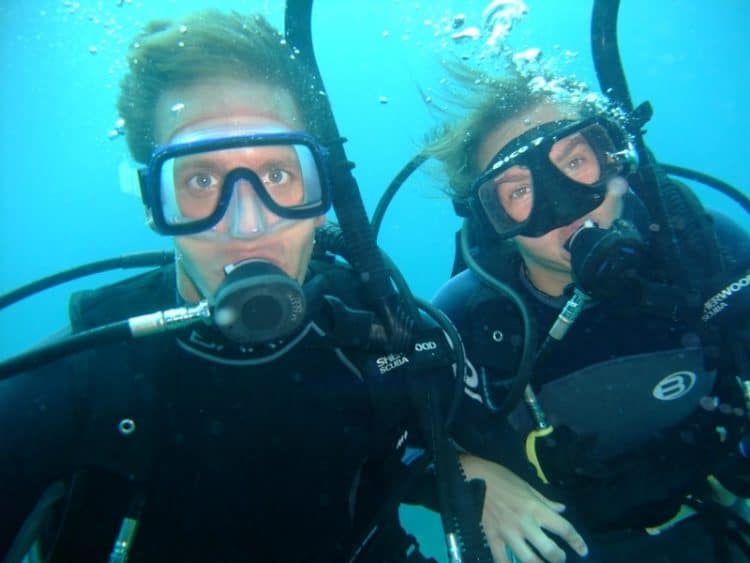

What do we do when we’re not chasing chicken buses from one town to the next? Here’s a hint.
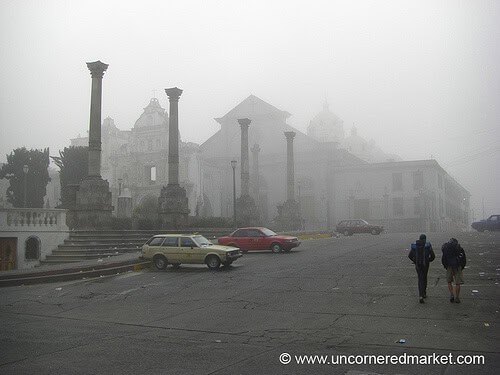
Some friends have suggested that we attach helmet cameras to our heads to give viewers the unabridged full monty version of our lives.
Trust us, you really don’t want to see all of it.
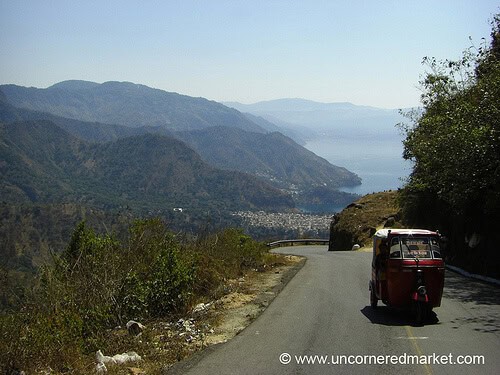
There we were at the dock in San Pedro bargaining for a boat to Santiago. The price seemed prohibitively high for a whimsical afternoon side trip on Lake Atitlan. Natasha, another traveler hoping to take the same boat, also questioned the price.
“You know, I have a car here. We could drive. You can just give me some gas money.”
When Guatemala City and the town of Totonicapan both wound up our itinerary, several Guatemalans we spoke to wondered aloud: “Now why exactly are you going there again?“
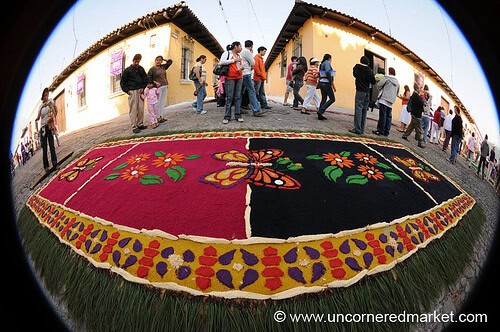
Sawdust carpets adorned with brightly-colored designs and cut fruit line the streets, giant carved floats sway on the backs of local men and women, and depressing dirges creep out of battered horns. Ceremony is high with marching Roman soldiers and elaborate crucifixion ceremonies as Guatemalan communities come together to mourn Jesus’ crucifixion and celebrate his resurrection and the close of Lent.
This is Semana Santa (Holy Week). And in Guatemala, no place takes to the occasion like the town of Antigua. We’ve never experienced a lead-up to Easter quite like it. The slideshow and video below show why.
With growing curiosity and a healthy double-edged dose of excitement and apprehension, we set off recently for the next segment of our journey: a new region with its own story, unfamiliar cultures with their own features, and distinct cuisines with their own flavors.
We share ten impressions from our first ten days in Guatemala – from chuchitos to proselytizers to contradictions – as we begin to absorb and comprehend an entirely new cultural panorama.

The Golden Kite of Burma (Myanmar): the trail connecting Rangoon (Yangon), Bagan, Mandalay, and Inle Lake. These four locations form a common itinerary for visits to the country. Their golden stupas, fields of ancient Buddhist pagodas, floating villages, and royal palaces tell a story of place caught between its modern-day struggles and an underlying narrative of a bygone era.
“Do travelers like us offer any value to America’s public diplomacy efforts?“

Start: 5:30 AM. Finish: 7:00 PM. Time actually spent marching in the inaugural parade: 30 minutes. Was it all worth it?
You bet.

The Baltics. Reminiscent of a bargain property on the original Monopoly board; not to be confused with the powder keg Balkans; a region whose history features intermittent eras of independence and occupation; and a place whose emotional pendulum swings between the almost white nights of its brief summers and the steel wool grayness of its long winters.
Home to over seven million people and three distinct languages and cultures, the Baltic region comprises the countries of Estonia, Latvia and Lithuania.
Now, a virtual show of hands: who knows where the Baltics are?