Think that Beijing is all about moo shu pork and Peking duck? Think again.
Tapas, paninis, sushi – even all-you-can-eat massage parlors. If you can name it – and eat it – you can probably find it in Beijing.
Food articles and recommendations from around the world.

Think that Beijing is all about moo shu pork and Peking duck? Think again.
Tapas, paninis, sushi – even all-you-can-eat massage parlors. If you can name it – and eat it – you can probably find it in Beijing.

Shortly after our morning encounter, our breakfast pal Vikram checked out our website and gave us a call. He hoped to facilitate our India experience by adding a bit of refinement to it.
A few phone calls and a couple of hours later, we were scheduled to meet with Rajan Sharma, the head chef at the Taj Hotel Chandigarh’s Dera Restaurant.

Not long after breakfast, we were sitting with Sharan and his business partner Rajiv, our previously virtual friends. They were the reason we had come to Chandigarh. Sharan had completed a small software project for me (to help put the finishing touches on our photo gallery) the year before. After the project, Sharan and I continued to stay in touch.
When he found out we were coming to India, we received an invitation to visit.

While most people don’t travel to the Caucasus and Central Asia solely to explore its foods, we did have our share of pleasant to exceptional eating experiences there. These included discovering some new-to-us cuisines and dishes that are unique to this region.
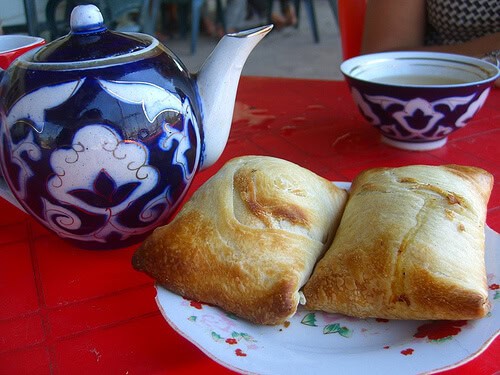
Mystery vegetables are better than mystery meat.
– the mantra we adopted after eating Central Asian meals for over three months
Although we would not advise an exclusively culinary expedition to Central Asia, the region does have its appetizing moments. Surrounding those moments, you’ll primarily find a nomadic carnivore’s dream or a vegetarian’s nightmare.
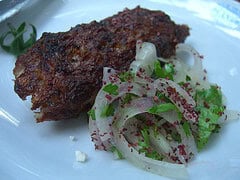
Given that Azerbaijani culture and language is Turkic in origin, it's not surprising that its cuisine also carries a strong Turkish influence. Doner kebabs are so prevalent on Baku's streets that you'd swear they were Azerbaijani by origin.

When we first moved to Prague in 2001, ethnic restaurants were relatively expensive; the selection was slim and value low. In response, we sought out odd spice shops and developed new skills in cooking Italian, Indian, Thai and Mexican. As with the availability of ingredients, the number of ethnic restaurants in Prague has grown substantially over the last few years. We’ve even been introduced to some new cuisines like Afghan and Georgian.

When we first moved to Prague at the end of 2001, fresh goods like celery and limes were luxury food items with out-sized price tags whose whereabouts were restricted to an imported food shop called Fruits de France.
In the last five years, however, the landscape for finding fruits, non-root vegetables, spices, herbs and imported goods in Prague has evolved rapidly. Prague still doesn’t have a good central food market or a “fresh market” culture like Vienna or Munich, but the Vietnamese community has managed to fill some of the void by opening endless fruit and vegetable shops. Although it’s still difficult to assemble a sophisticated, full-course meal with one stop, if you know where to look you can find almost anything you need.
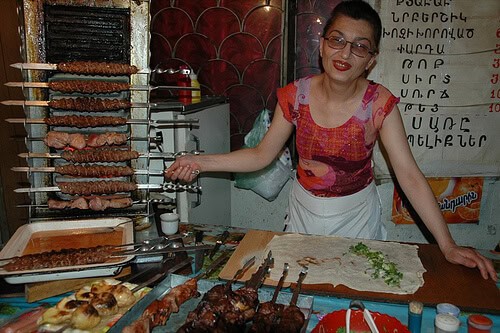
Searching hopelessly one night for what turned out to be a defunct traditional Armenian restaurant, we inquired with the locals in Yerevan regarding where we could find good traditional Armenian food. “There,” all fingers pointed in the direction of one of the handful of local kebab joints.

Wondering where the real Vietnamese food is in Prague? Are fresh herbs and Asian goods your thing?
Where did you get those bags of frozen tiger shrimp? Where do you get your fresh Thai basil and long beans? Where did you get all those fresh herbs for your Vietnamese summer rolls?
If we had a nickel (a Czech koruna, perhaps?) for every time we’d been asked these questions, we’d have enough money to buy a vote in the Czech parliament.
We covet the secret no longer. Here’s the scoop…